
Construction Management at Risk | Restaurant & Hospitality | Jersey City, NJ
The tower had nowhere to stand.
The owner already knew who to trust.
After successfully completing multiple Zinburger locations, The Briad Group trusted Contour to manage an all-union restaurant build at Newport Centre under an open-book Construction Management at Risk structure. When an unidentified underground obstruction invalidated the signature tower’s original foundation design, that established relationship enabled a rapid cantilevered solution—while disciplined procurement left approximately $391,000* in savings with the owner.
owner-retained savings created
project start to turnover
public safety incidents
THE ASSIGNMENT
The Briad Group was not hiring an unfamiliar contractor for a one-off restaurant. Contour had already delivered multiple Zinburger locations for the hospitality owner, building familiarity with the brand, its operating standards, design team, and the decisions that mattered to opening a successful restaurant. For the Newport Centre location in Jersey City, Briad extended that trust through a Construction Management at Risk structure that gave Contour responsibility for managing subcontractor and vendor procurement transparently on the owner’s behalf.
Contour’s general conditions were established under a guaranteed maximum price. Subcontractor and vendor costs were managed open-book at actual cost plus an agreed fee, with a progressive shared-savings incentive tied to the final result. The structure made Contour’s role broader than administering contracts or supervising work. Briad was entrusting the company to buy the project intelligently, challenge costs, manage tradeoffs, and use its commercial judgment in the owner’s interest.
THE COMPLICATION
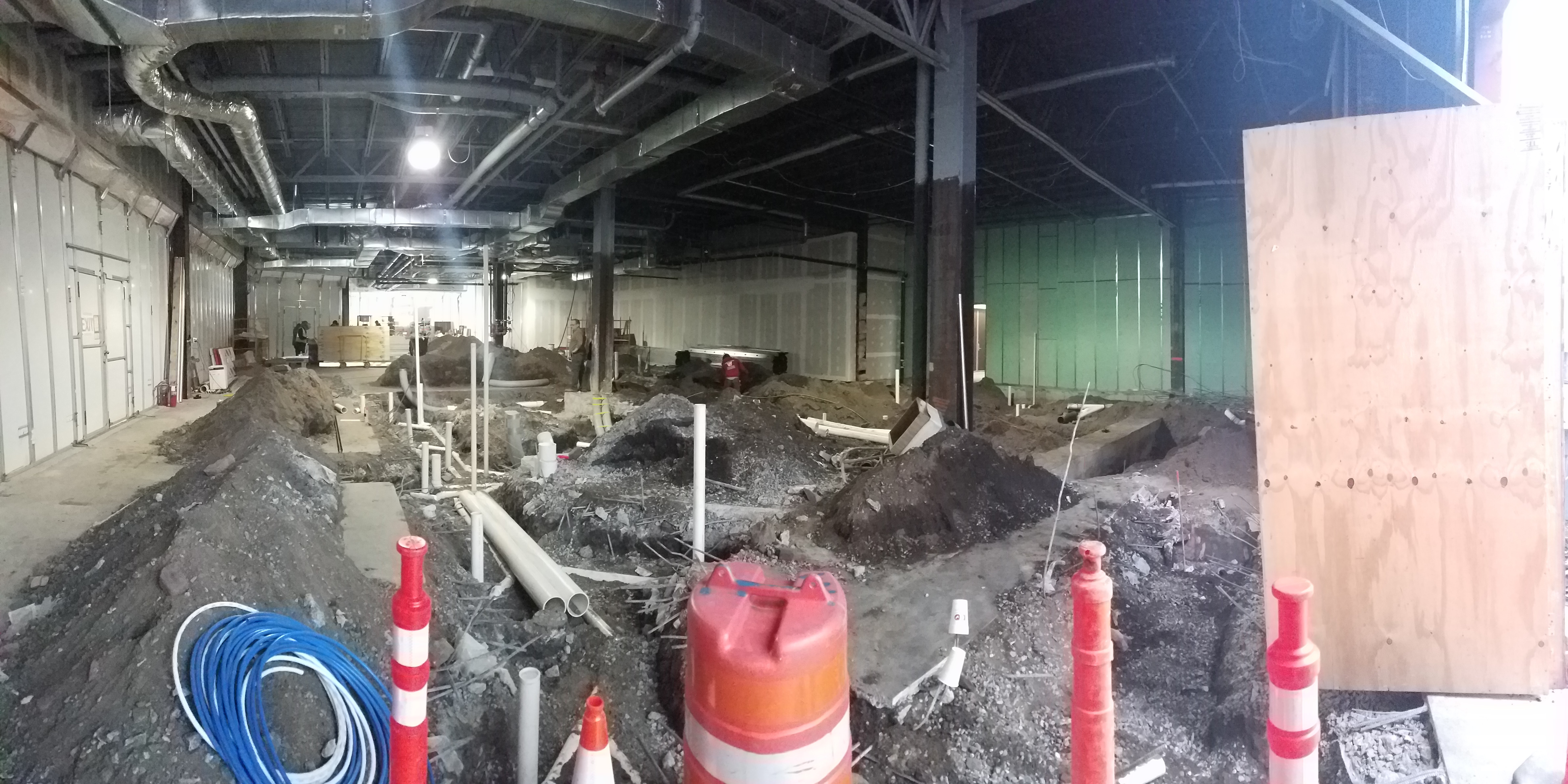
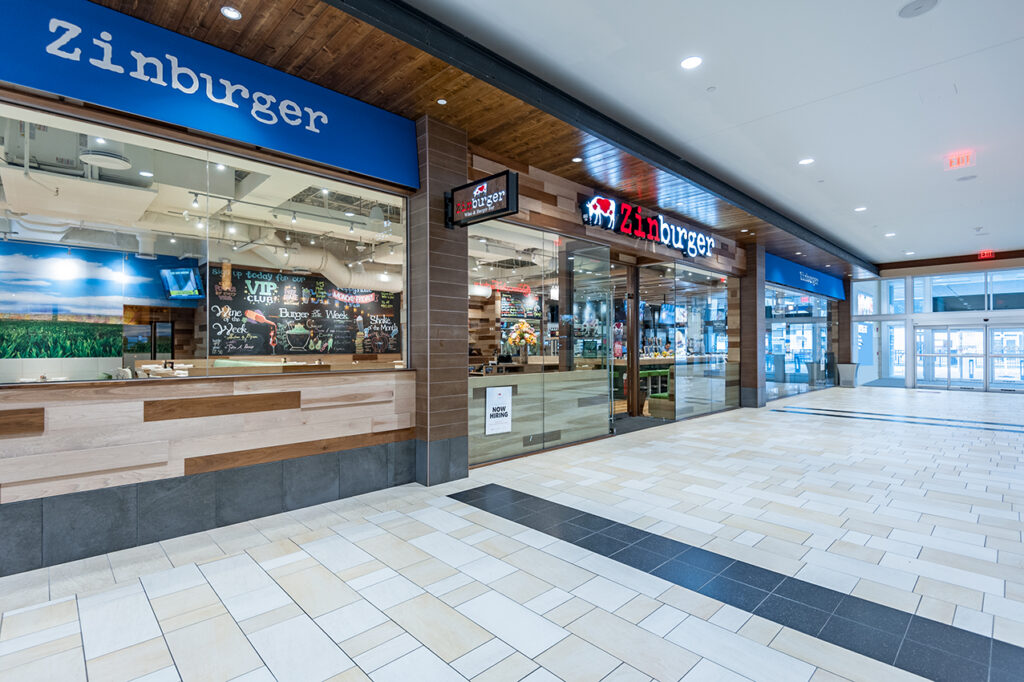
Newport Centre is a Simon property embedded in one of Jersey City’s busiest retail and commuter environments. The mall served as a daily path of travel for people moving between the PATH system, surrounding workplaces, shopping, and dining. Construction fencing did not eliminate the public interface; pedestrians occasionally attempted to climb or bypass the perimeter in search of a shortcut. Contour had to maintain constant vigilance while coordinating deliveries, equipment movement, crane operations, and other high-risk activities with mall management, transit representatives, security authorities, and the project team.
Every trade—including directly hired general-purpose labor—was required to be union. The work also involved a complicated existing structure, restaurant-specific mechanical and utility systems, extensive exterior improvements, and a signature architectural tower whose support depended on micropiles installed within a legacy waterfront and rail-influenced site.
During micropile installation, the team encountered refusal at an unidentified subsurface obstruction. Historical research conducted after the project suggested it may have been the cap of an abandoned transit tunnel, although its origin was never conclusively verified. Whatever the obstruction was, it invalidated the original direct foundation-supported approach for the tower and put both the architectural feature and the opening schedule at risk.
CONTOUR'S RESPONSE
Contour’s field team exposed, measured, and verified the relationship among the obstruction, existing pile cap, grade beam, and building columns. The team initiated an alternate approach and coordinated with the structural engineer to convert the tower from a direct foundation-supported system into a cantilevered steel assembly tied back to the existing building. New structural steel, connections to the existing grade beam and columns, diagonal bracing, cable bracing, and additional lateral support allowed the tower to be carried without attempting to remove or penetrate the unidentified obstruction.
The response preserved the tower’s architectural intent while turning an open-ended subsurface problem into a buildable structural solution. Because the investigation and redesign occurred within an established owner-contractor-design relationship, field information, design input, cost consequences, and execution decisions could move through the same working team instead of becoming a sequence of disconnected handoffs.
At the same time, Contour continued to manage the owner’s money through competitive subcontractor procurement, continued trade negotiations, disciplined purchasing, and selective self-performance with directly hired union labor. The project cost records document labor supporting demolition, brick-paver removal and relocation, material and equipment handling, millwork and kitchen-equipment unloading, cleanup, and other targeted field needs. This gave the team another tool for controlling cost and maintaining production without abandoning the project’s union requirements.
The open-book structure also made small decisions visible. Contour questioned scope, reconciled design intent with field conditions, pursued legitimate subcontractor backcharges, and negotiated purchases rather than treating cost-plus reimbursement as protection from financial accountability. The shared-savings provision ensured that better procurement and field decisions benefited the owner first while rewarding Contour only when documented savings were actually produced.
THE RESULT
From the August 2016 project start through turnover, Contour delivered the restaurant in approximately eight months despite a fundamental redesign of the signature tower. That total duration included structural investigation and redesign, public protection, all-union trade coordination, major deliveries, and stakeholder approvals within an active mall and commuter environment.
Financially, disciplined procurement, trade negotiations, and selective use of directly hired union labor left approximately $391,000* in savings with Briad after the contractual performance incentive. The result demonstrates that open-book cost-plus procurement did not weaken cost discipline; in the hands of a trusted CMAR partner, it created transparency, flexibility, and measurable owner value.
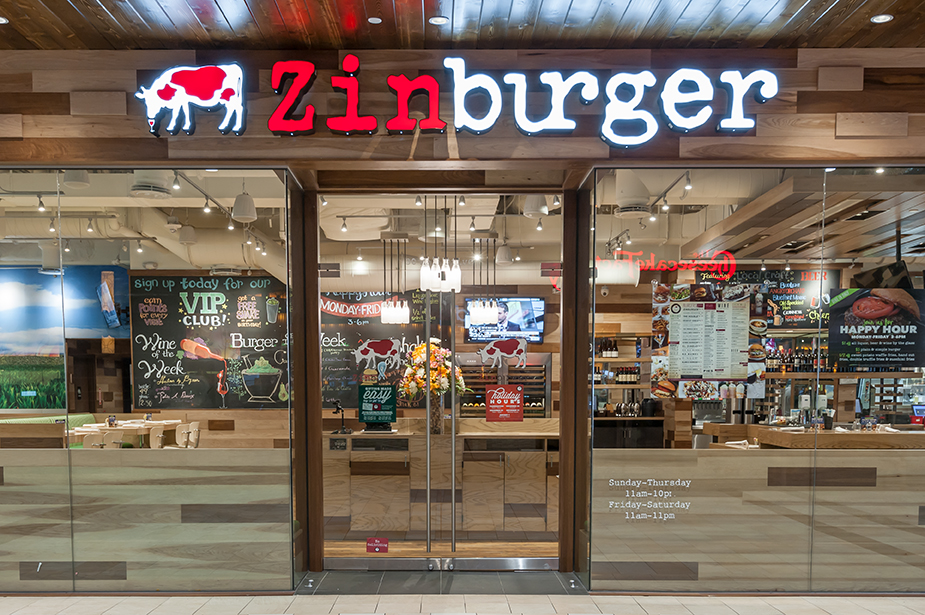
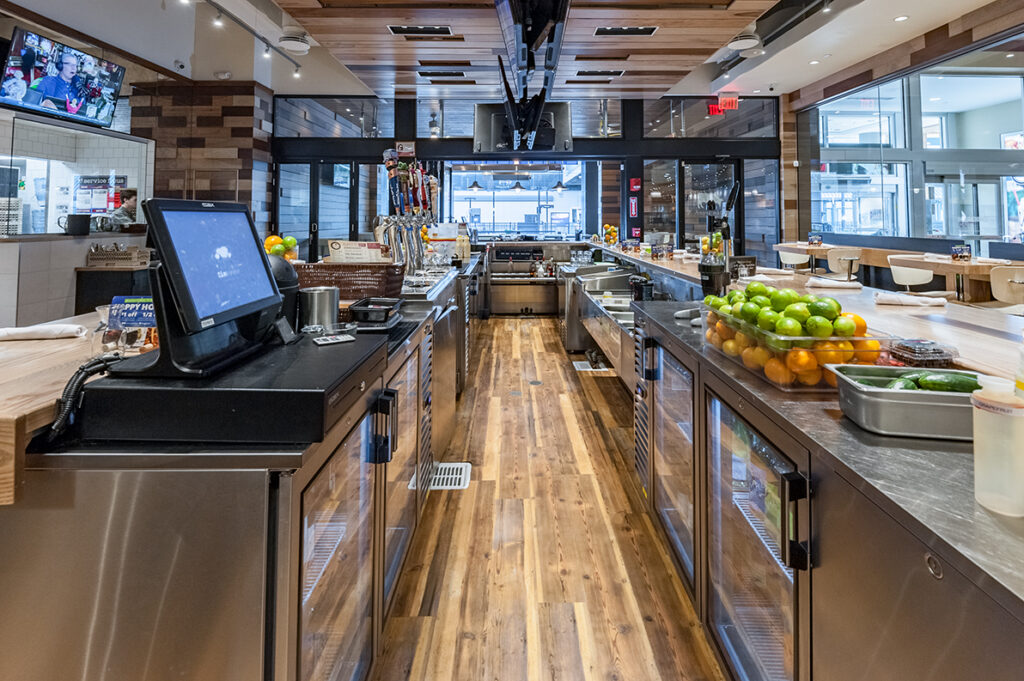
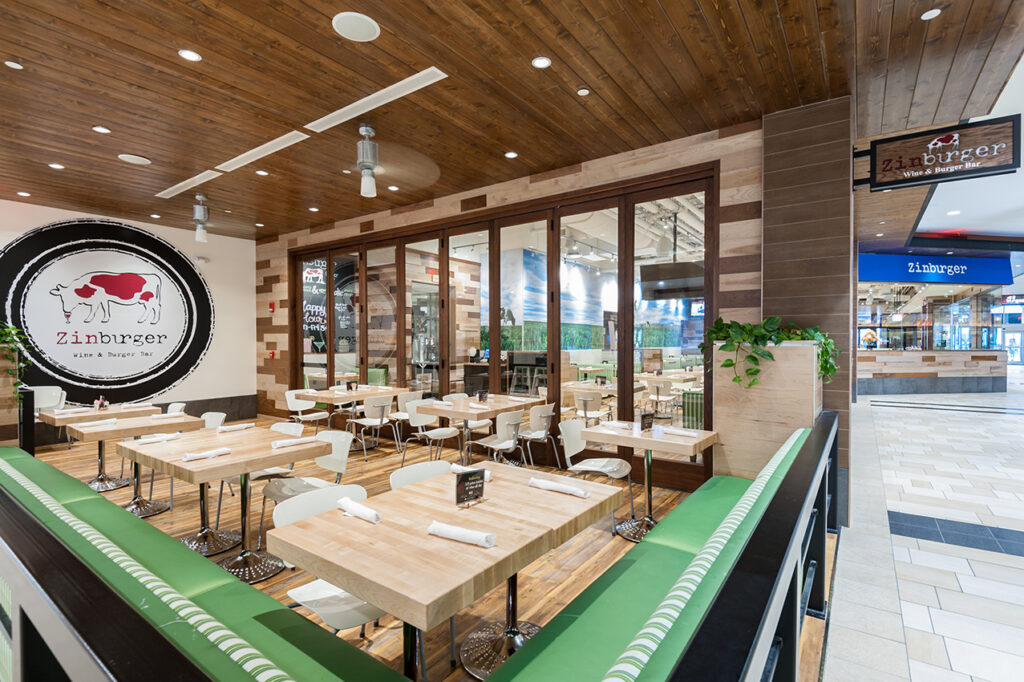
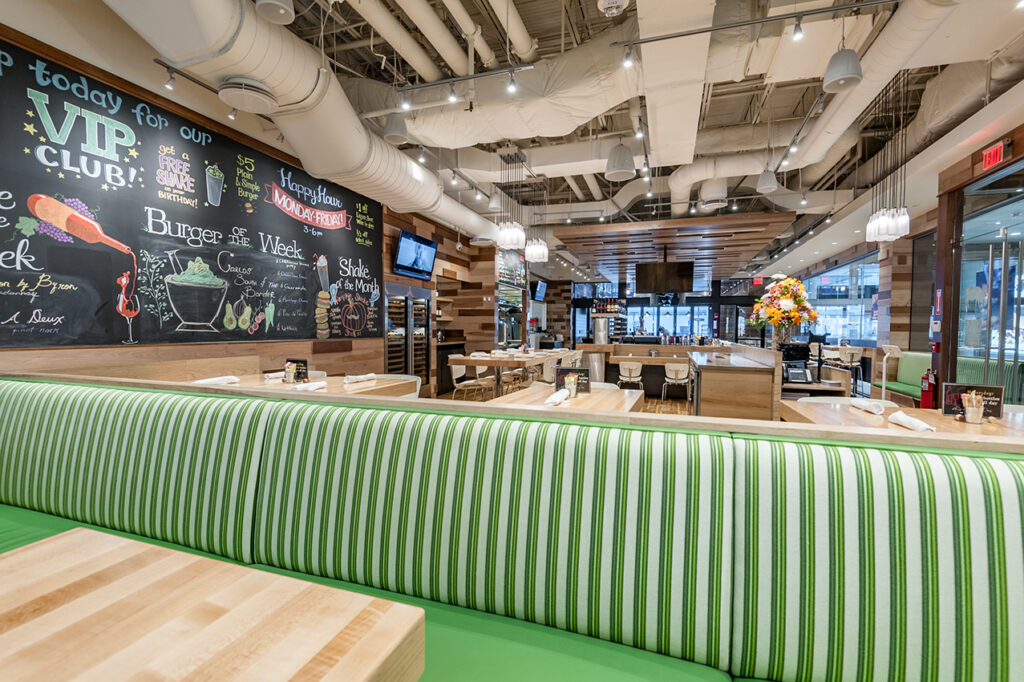
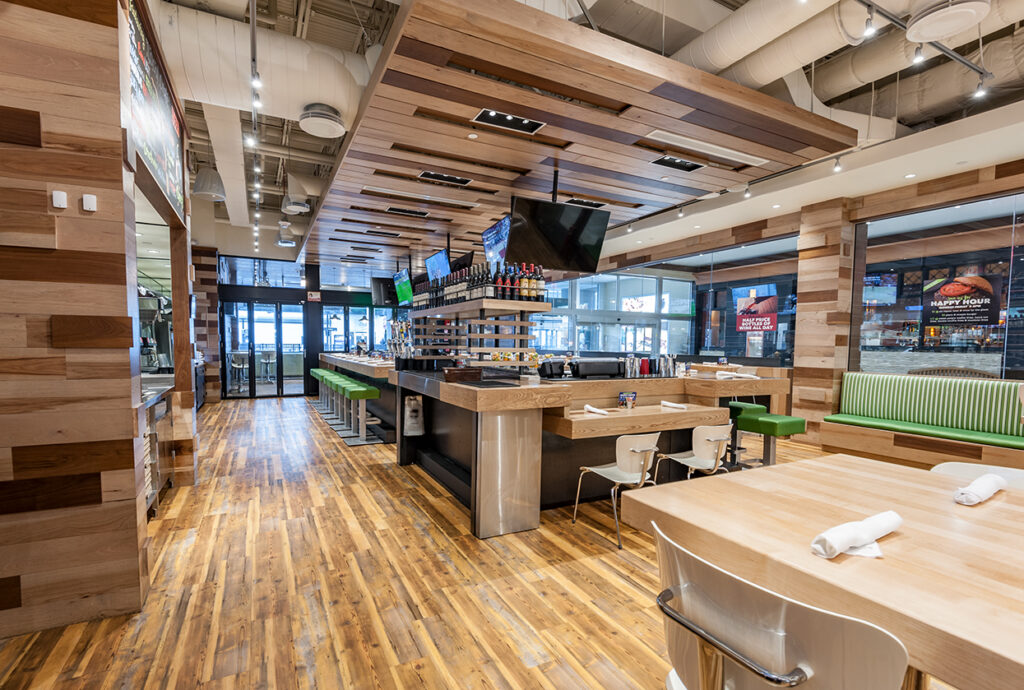
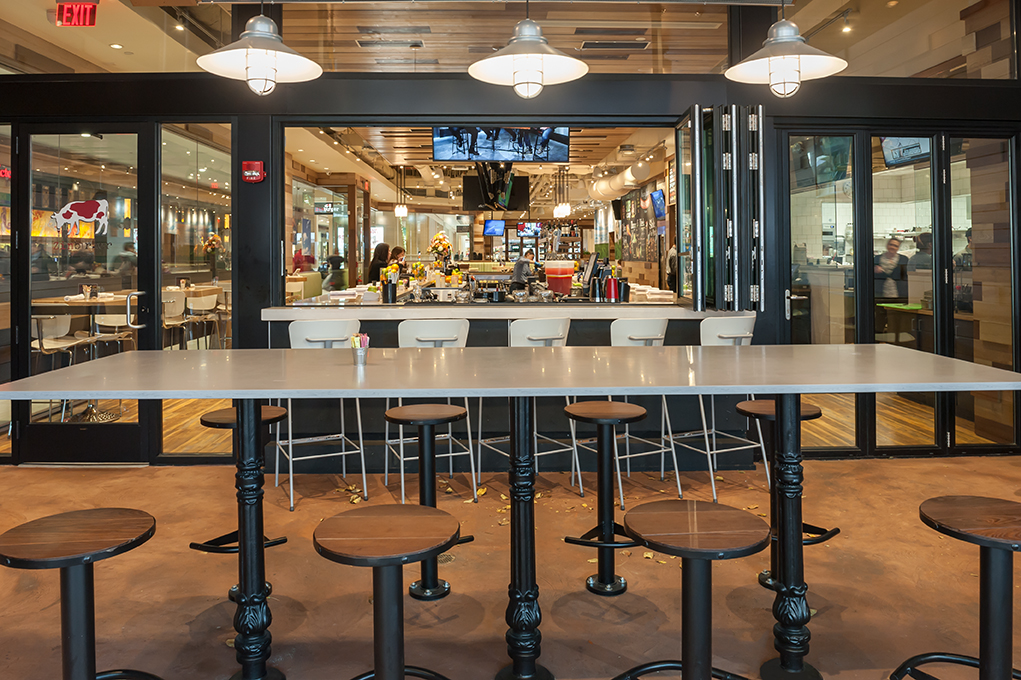
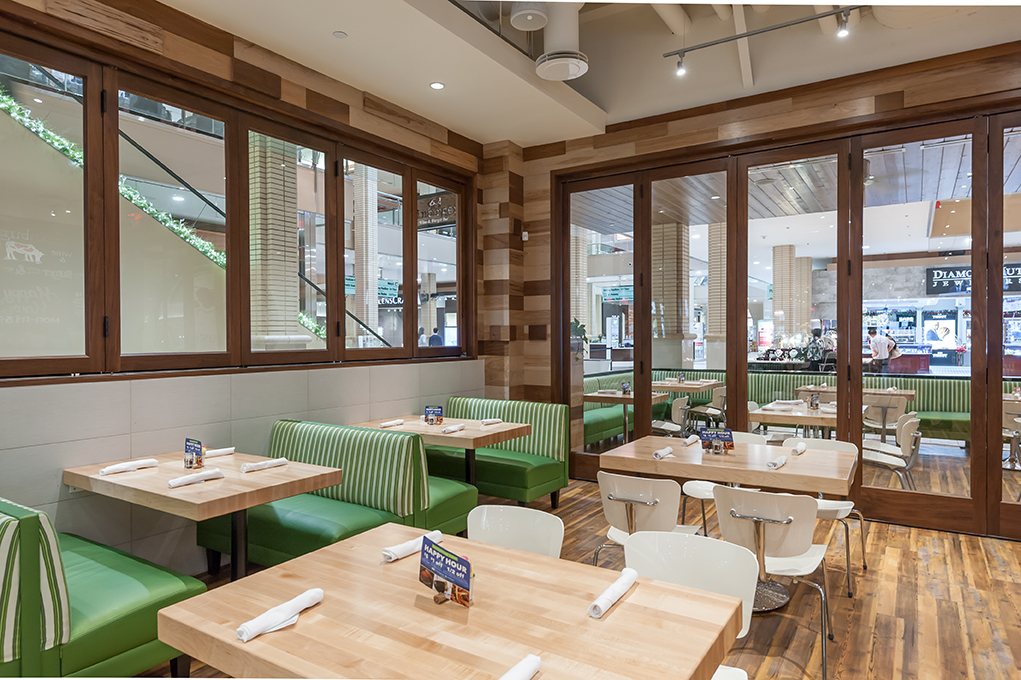
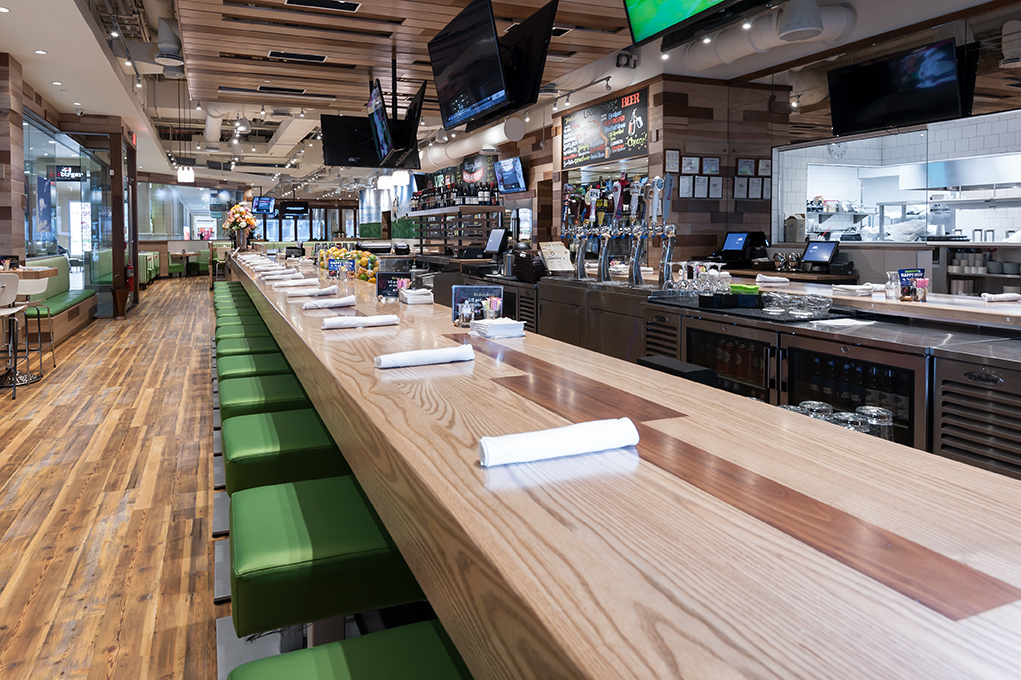
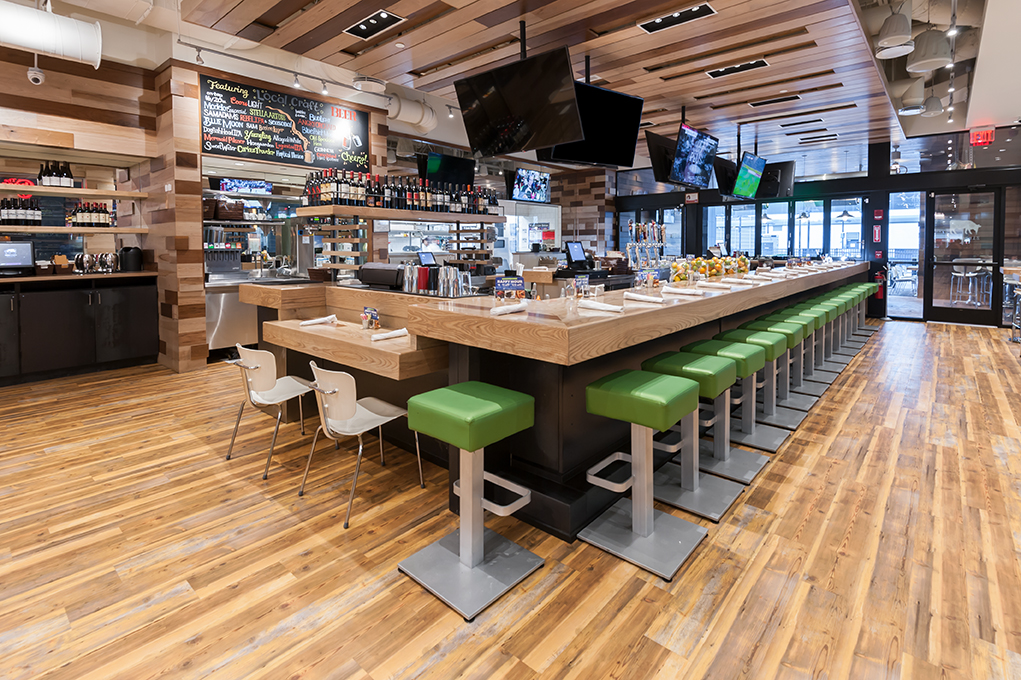
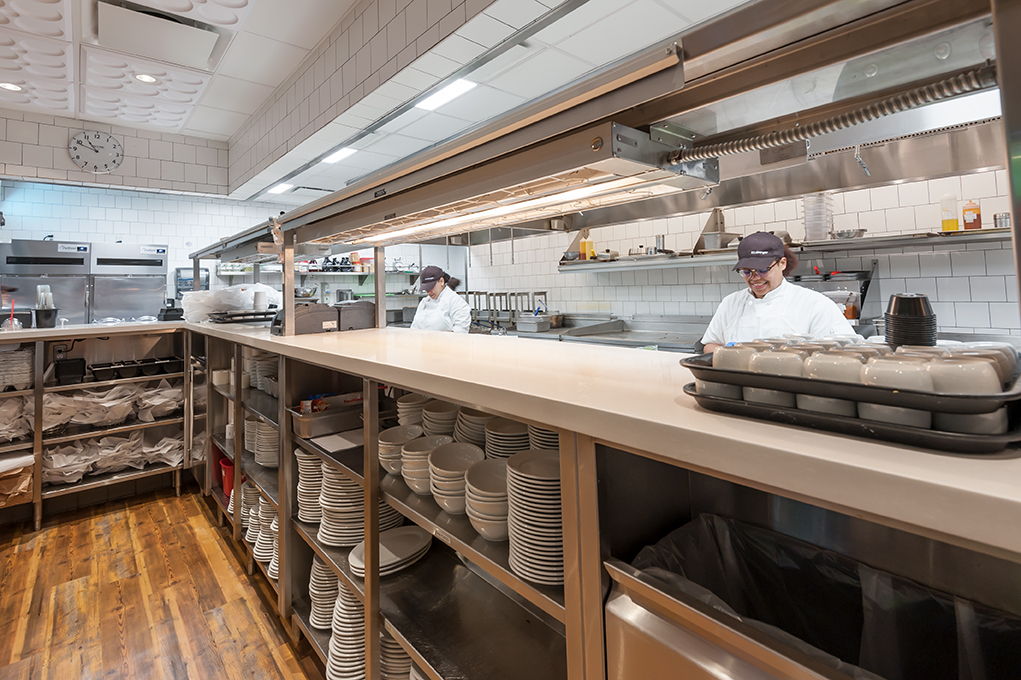
The visible result was a highly detailed restaurant delivered inside a demanding Simon property after the original tower foundation became unusable. The deeper result was confirmation of the relationship Briad had already built with Contour: the company could be trusted with subcontractor and vendor spending, difficult field decisions, and the owner’s broader development interests—not merely the construction scope placed in front of it.
“You’ve all asked good questions, and offered even better suggestions, extending your role as GC into being part of our Zinburger Development Team.”
WHAT THIS DEMONSTRATES
Construction Management at Risk creates value only when transparency is matched by judgment. A cost-plus structure can show an owner where the money went; a trusted construction manager must also explain why it should be spent, challenge it when it should not, and connect procurement, design, field execution, and schedule recovery to the owner’s business objective. At Newport Centre, Contour’s general conditions were guaranteed, but the larger proof was how the company managed the costs entrusted to it—and why the owner came to view the team as part of its development operation.
*Monetary figures are stated on a July 2026 constant-dollar basis using CPI-U. They provide historical context and are not replacement-cost estimates.
Get In Touch
Ready to build?
Contact us today to discuss your next commercial construction project. We’re ready to bring predictability and excellence to your build.
CALL US
240-405-0123
Email Us
contact@contour-gc.com
Location
7800 Biggs Ford Road, Unit B2 Frederick, MD 21701